• Home
  • Commercial & HOA

Built for people
who buy this
professionally.

Boards, property managers and builders buy outdoor construction on different terms than homeowners do — documentation, phasing, access, and a contractor who can be relied on to communicate in writing. This page is what that looks like with us.

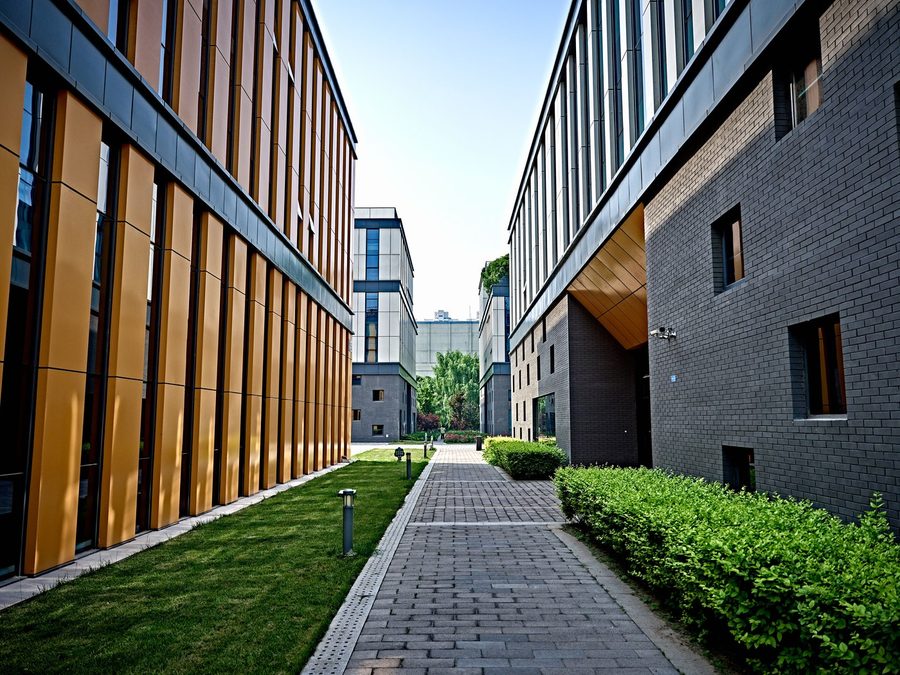
Commercial grounds — a paved walk, lawn and planting between office buildings
Commercial groundsWalkable wet, and serviceable without closing the car park.
Segments

Who we work with.

Five buyer types, five different sets of concerns. What is constant is that none of them can afford a contractor who goes quiet.

01

Homeowner associations

Common-area hardscape, drainage remediation, entry features, slope planting and wall repair — with board reporting, a documented scope and work sequenced around residents.


02

Property managers

Multi-property portfolios, recurring drainage and hardscape issues, tenant-occupied sites, and a single point of contact who answers the phone.

03

Builders & developers

Outdoor scope on new construction and spec homes — grading, drainage, flatwork, walls, irrigation and planting, delivered against a construction program.

04

Commercial property

Grounds, parking-area drainage, walkways, plazas and courtyards, retaining structures and site accessibility work — office, retail, industrial and mixed-use.

05

Parks & public grounds

Park and open-space grounds, trails and pathways, turf and irrigation at scale, shade and seating areas, slope and creek-edge planting, and school, church and municipal sites.

Self-performed, and that is the point

Grading, drainage, concrete, masonry, walls, irrigation and planting are all our own crews — so the scope arrives as one contract with one accountable party, not as five subcontractors meeting at the edges. That is what holds a program together on an occupied site.

01

HOA & architectural review.

Association work has an approval layer that residential work does not, and the most common cause of delay is a submission that arrives incomplete and waits a full cycle for the next meeting.

Submission package
Scope narrative, plan and elevations where relevant, material and color specification with samples, and the construction sequence — assembled to what the specific association's guidelines ask for rather than a generic set.
Review timing
We ask for the committee's meeting calendar at the start and build the program around it. A realistic date is given up front, including the review window — not a start date that assumes instant approval.
Two approvals, not one
Architectural approval and a building permit are separate, run on separate timelines, and neither substitutes for the other. Both are tracked.
Board reporting
Written progress at an agreed interval, in a form that can be read into minutes without being rewritten.
Resident communication
Advance notice of noisy operations, access restrictions and parking impact, issued through the manager or board rather than improvised on the day.
Reserve-study context
Where work relates to a reserve component, we scope and document it so it can be reconciled against the study rather than sitting outside it.
02

Property managers.

  • One contact. The person who quotes the work runs the work and answers the phone during it.
  • Written scope before pricing. So a board or an owner can see what is included without decoding a line item.
  • Findings reported, not buried. If we open a drainage run and find the real problem is upstream, you get told with photographs the same day and a number to take to the owner.
  • Documentation on request. W-9, references and scope documentation, without a chase.
  • Multi-property consistency. The same specification and the same reporting format across a portfolio, so comparing sites is possible.
03

Builders & developers.

Outdoor scope is usually the last trade on site and absorbs every delay ahead of it. We plan for that rather than pretending otherwise.

  • Sequenced against your program — sleeving, rough grading and drainage stubs coordinated with the trades that must come before them.
  • Sleeves and stubs go in early. Irrigation and lighting under future hardscape, installed while the ground is open. Retrofitting after flatwork is poured is a cost nobody budgeted.
  • Drainage tied to the approved civil design, with discharge points confirmed rather than assumed.
  • Realistic float. We will tell you what we can hold and what we cannot, and we would rather give a date we can meet than the one you want to hear.
  • Punch handled once, with a walk and a written list rather than an open-ended trickle.
04

Procurement & documentation.

Everything below is available on request, before award, without a follow-up.

Standard document set
DocumentDetail
W-9Current, matching the contracting entity name.
Scope of workWritten narrative plus specification, referencing our published build standards.
ScheduleStart, duration, milestones, and what each depends on.
ReferencesComparable work, with permission to contact.
PermitsWhich are required, who pulls them, and the expected review period.
WarrantyWritten terms, provided before signing — see Warranty.

Prevailing-wage and certified-payroll requirements apply to public-works projects in California and are a separate compliance regime. If a project is subject to them, raise it at the inquiry stage so it can be addressed properly rather than discovered mid-contract.

05

Working on occupied sites.

Residents and tenants do not pause for construction. On an occupied site the logistics are most of the job.

Phasing
Work broken so that access, parking and egress are never all closed at once. A phase plan is issued before the first day.
Pedestrian routing
Signed, barriered and lit where it crosses a work area. Accessible routes stay accessible or a compliant alternative is provided.
Notice
Advance written notice of anything that affects a resident — water shutdown, driveway closure, noise, or loss of a parking bay.
Hours
Worked to the jurisdiction's noise ordinance and to any tighter restriction in the association's rules.
Site security
Excavation secured every night, materials contained, equipment immobilised. See daily site conduct.
Clean handback
Each phase handed back swept and usable rather than left staged until the end of the whole project.
06

Scope & bid packages.

If you are putting work out to competitive bid, the quality of the comparison depends almost entirely on how tightly the scope is written. Vague scope produces bids that cannot be compared and a low number that grows through change orders.

  • Specify the buried work. Base depth, compaction target and fall — not just the finished surface. Our standards page is written so you can lift the figures straight into a bid document, including for bidders who are not us.
  • Name the products or name the performance. Either a specific unit and color, or the property it has to meet. "Similar quality" is not enforceable.
  • State who handles permits and approvals and whose program absorbs the review period.
  • Require the exclusions in writing. The cheapest bid is frequently the one that excluded the most, and it will not be obvious until the change order arrives.
  • Ask for a unit rate for the unknowns — additional excavation, rock, unsuitable material — agreed up front rather than negotiated when found.

We will read a competing bid with you

Bring the other proposals to the walk. We will tell you what each one is actually pricing and where the gaps are, including where ours is higher and why. If that leads you to a different contractor with a clearer scope, that is a reasonable outcome and we would rather it happened before the work than during it.

07

Starting a conversation.

Send the property address, a short description of the problem or the scope, and any drawings, reserve-study extract or previous report you already hold. We will come and walk it. For association and portfolio work we will also tell you plainly whether it is the right size for us before anyone spends time on a bid.

Send us the property.

Address, scope, and anything you already have on file. We will walk it and tell you honestly what it needs and whether we are the right contractor for it.

Call Now Free Estimate